
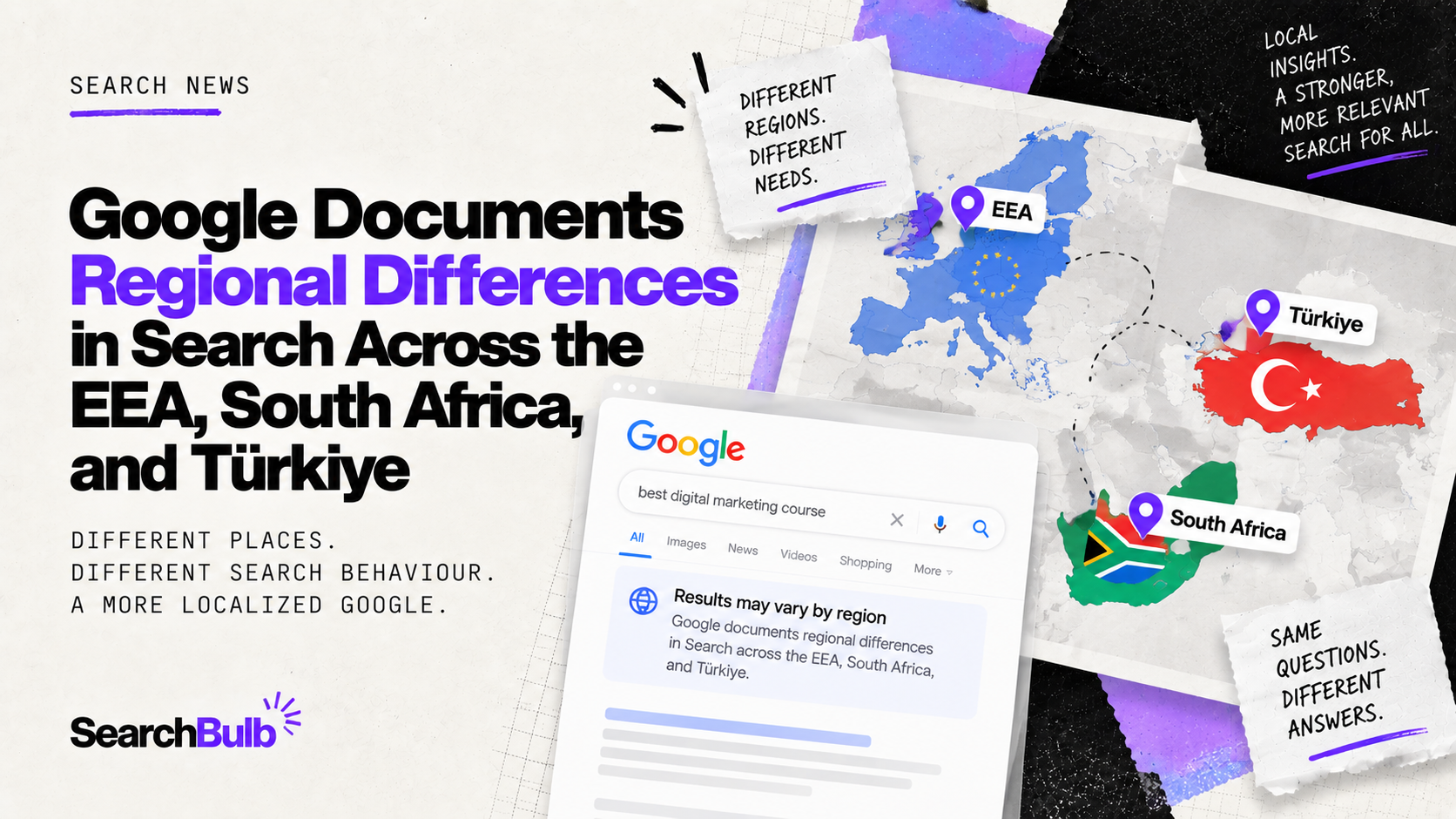
Google Search Central published new documentation on 8 September 2026 mapping out search features that only appear in specific regions, giving publishers and businesses one place to check what a searcher in the EEA, South Africa, or Türkiye actually sees that a searcher elsewhere doesn’t.
What’s In The Guide
The new “Regional differences in Search experience” page filters by region and query type to show which features apply where. Between the three regions, it covers:
- Aggregator unit (EEA only). A block on the results page for Vertical Search Services, think online travel agencies, comparison shopping services, and directories, covering hotel, flight, long-distance train and bus, and product queries.
- Supplier unit (EEA only). A companion unit that gives direct providers, like an individual hotel or airline, visibility alongside the aggregator unit. It only appears when an aggregator unit is also showing for that query.
- Ecosystem carousel (EEA only). A data-visualization carousel for weather, sports, finance, and translation queries.
- Job sites and Places sites features (EEA and Türkiye). Dedicated carousels and filter chips linking to aggregator sites for job listings and, in Türkiye, hotels and local businesses.
- South Africa badge and refinement chip. A badge and filter for South African businesses across travel, products, car hire, food delivery, and ground transportation queries.
- Structured data carousels (beta). Scrollable result carousels available across all three regions for businesses that implement the required markup.
The aggregator and supplier units are genuinely new, they rolled out alongside this documentation. Some of the other features, like the ecosystem carousel, have existed since February 2024. This update is really the first time Google has pulled all of it into one documented, filterable reference.
Why Now: This Is a DMA Compliance Story
This isn’t a routine feature drop. It’s part of Google’s response to the EU’s Digital Markets Act, which requires Google to give comparison shopping services and other vertical search providers fairer visibility on its results pages, an area Google has faced antitrust scrutiny over for years.
Google has separately confirmed that these EU compliance changes are among the most disruptive alterations it has made to Search, describing the DMA-driven redesign as a significant reduction in search quality by its own internal measures, a striking admission for the company to make publicly. That context matters here: the aggregator and supplier units are the concrete product of that redesign, and this documentation is Google explaining the new rules of the road to the businesses affected by it.
How Businesses Actually Get Into These Units
Eligibility isn’t the same across features:
- The aggregator unit requires approval as a Vertical Search Service plus a data integration that depends on the vertical: a lodging feed for hotels, a real-time API for flights and ground transportation, or enrollment in Google’s Comparison Shopping Services program for products.
- The supplier unit needs no special data submission. Google can use information already gathered through normal crawling, though a feed can improve what’s shown.
- Structured data carousels require implementing the relevant markup for your content type.
- The job sites, places sites, and ecosystem carousel features require no new markup or feed at all.
Why This Matters If You Handle International SEO
The practical takeaway is that localization now has to be thought about at the search-experience level, not just the content level. Knowing what keywords you rank for in Germany or South Africa isn’t enough anymore. You also need to know what layout Google is actually showing someone in that market for that query, and whether there’s a unit your business could appear in.
There’s a second, more immediate implication: if you’re watching rankings or Search Console performance for an EEA, South Africa, or Türkiye market and see a sudden shift, check whether a layout change explains it before assuming your organic performance actually moved. A new carousel or unit pushing other results around the page can look like a ranking change in your reports when it isn’t one.
If you want to see exactly what a search results page looks like for a specific location before drawing conclusions from your data, SearchBulb’s free Local SERP Checker lets you preview localized results directly rather than guessing from ranking numbers alone.