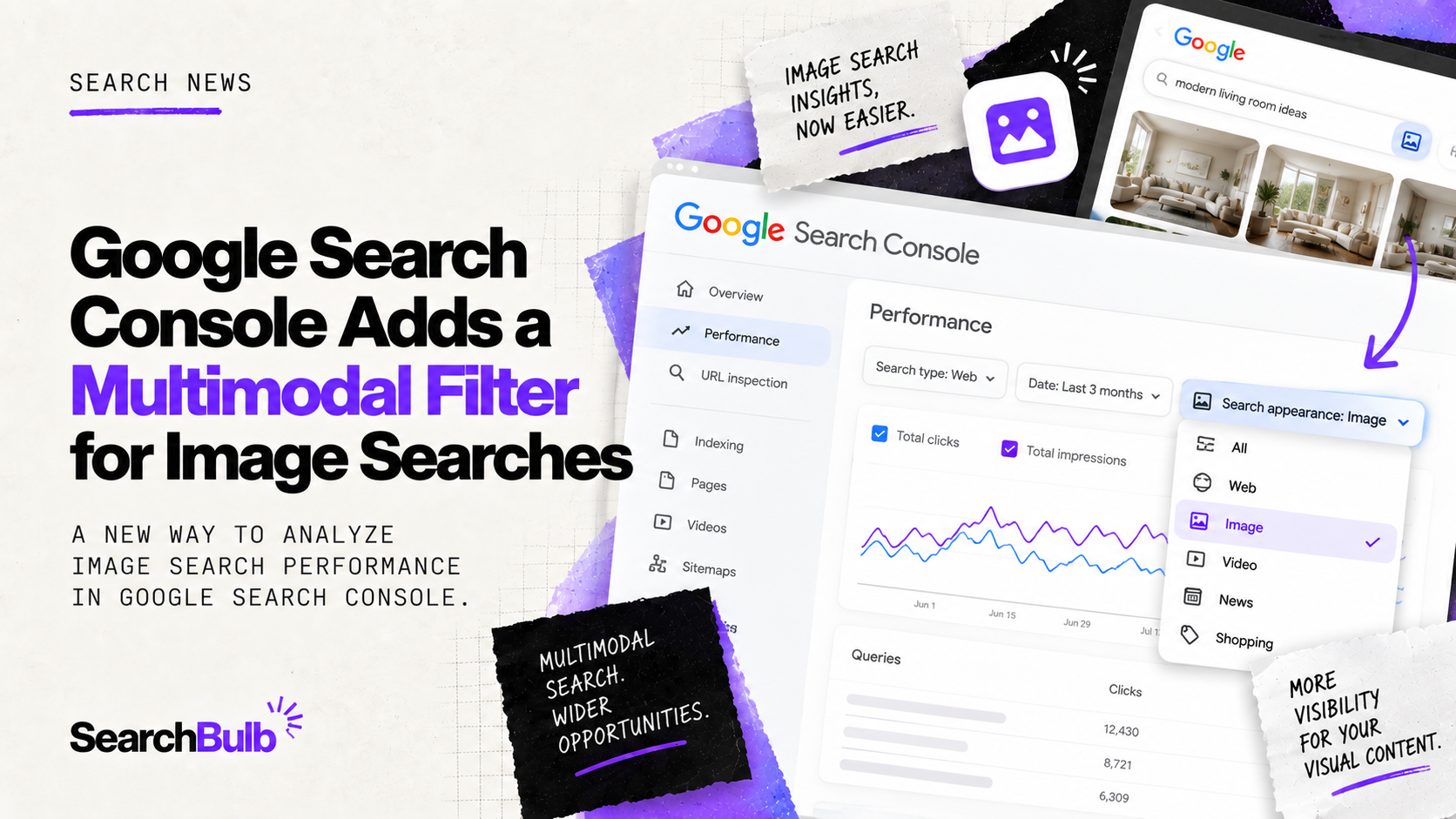
Google Search Console now splits its Web performance data into two search types: Text-based and Multimodal. The new Multimodal option shows how often your pages appear in searches that start with an image instead of typed words.
What Changed
Google announced the update on the Search Central blog on September 24, 2026, in a post from Harsh Kharbanda, Product Manager Lead for Google Lens, and Moshe Samet, Product Manager Lead for Search Console. Some site owners spotted the new filter appearing in their reports before the official announcement went live.
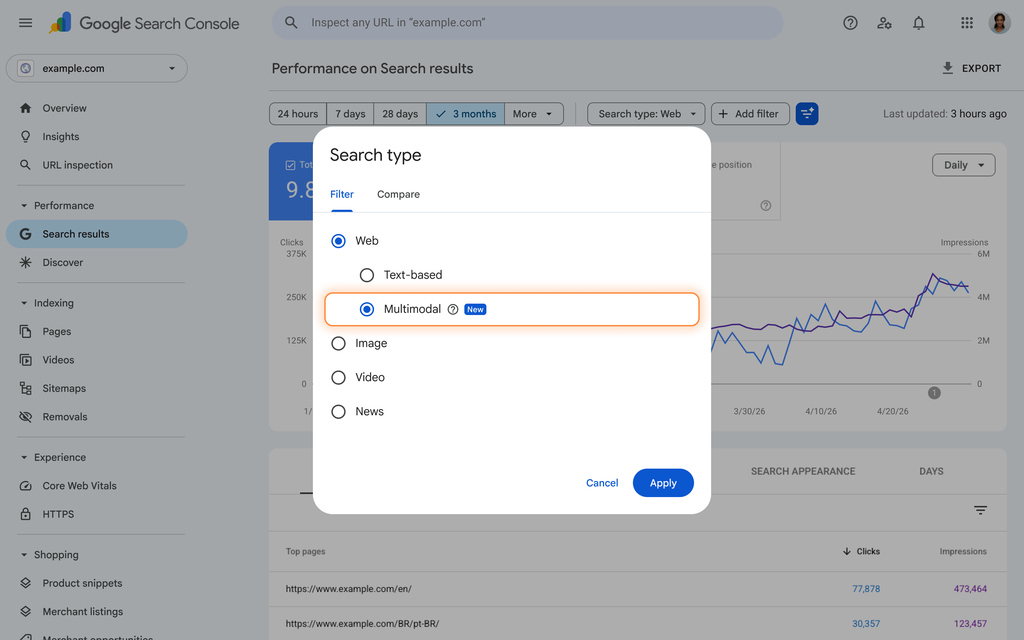
Under the Performance report’s Web search type, you’ll now see two options where there used to be one: Text-based, for standard typed queries, and Multimodal, for searches that used an image as part of the search. Google’s own help documentation defines multimodal as any web result triggered by a search that used an image, photo, or screenshot, rather than text alone.
Multimodal traffic includes searches made through Google Lens, Circle to Search on Android, images uploaded directly to Google Search, and the Chrome right-click “Search this image” feature. Google also added multimodal reporting to the generative AI performance report, which already shows impressions but not clicks.
No Query Data For Multimodal Searches
There’s one significant limit built into this new filter: it doesn’t come with query data. When you select Multimodal as your search type, the queries tab disappears entirely.
Google’s reasoning, per its own help documentation, is straightforward: multimodal searches are built around an image rather than text, so there’s no query string to report in the first place. You can see which of your pages received multimodal traffic and compare it by country and device, but not which specific image or search prompted the visit.
A Clarification Worth Knowing: This Data Wasn’t Counted Before
One detail matters more than it might first appear. A site owner asked on Bluesky whether multimodal impressions had simply been folded into the old Web totals all along, meaning today’s split would make existing Web numbers look artificially smaller. John Mueller checked with Google’s team and confirmed that wasn’t the case: this multimodal data was not previously included in Web totals at all. It’s genuinely new visibility, not a reclassification of numbers you were already seeing.
That said, one user did report a separate drop in impressions and clicks on a few properties starting around September 10, which they noticed lined up with the new data becoming visible. Google hasn’t directly addressed that specific observation, so it’s worth checking your own historical trend rather than assuming either explanation applies to your site.
What This Doesn’t Do Yet
The multimodal filter is currently a Search Console interface feature only. As of early September, Google’s Search Analytics API documentation didn’t list multimodal as a selectable value for pulling this data programmatically, so if you rely on the API for reporting, you’ll need to use the Export button in the UI for now rather than scripting it directly.
The rollout is global and started September 24, but Google hasn’t said whether it includes historical data from before that date or only counts going forward. If your property shows the new option, it’s worth comparing the fresh split against a full day of your existing Web totals to see how the numbers reconcile.
Why This Matters
For sites with a lot of product photos or other visual content, this is a genuinely useful way to see whether Google Lens and similar image-search features are sending you traffic at all, something that was previously invisible. Retail and ecommerce sites are the most obvious beneficiaries, but any image-heavy page could show up here.
The lack of query data is a real constraint. You’ll know a page got multimodal visits, but not what image or context drove them. Treat this as a directional signal, confirmation that image search is or isn’t a meaningful channel for a given page, rather than a full replacement for query-level insight.